Julia Pirotte (1908-2000)
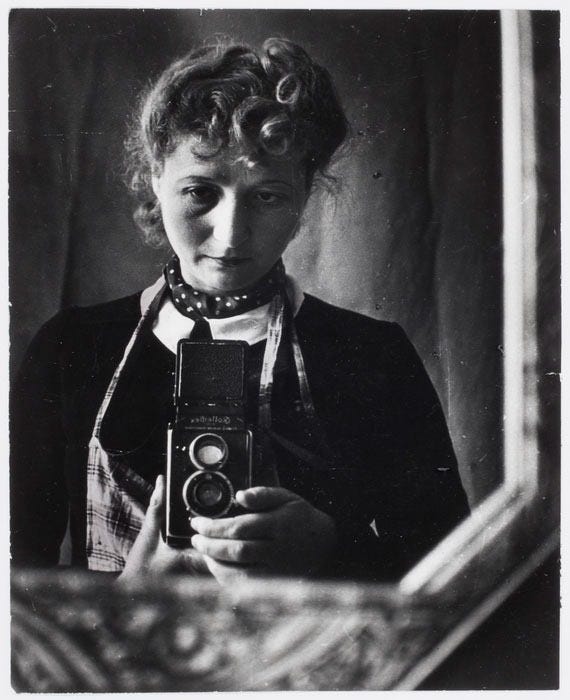
Julia Pirotte (née Diament) was born in Konskowa, a small Jewish town in Poland. She described the social and political climate there as threatening and one in which she felt persecuted. Julia was born into an impoverished family and was one of three children - her mother died when she was just seven years old.
In 1925, Julia and her sister Mindla Maria Diament (1911-1944) were sentenced to four years imprisonment for being members of the Communist Party. With the threat of further imprisonment, in 1934 Julia fled to Paris to join her younger sister. On route she went to Belgium to claim refugee status but fell ill, thus delaying their reunion. However, it was here that she met her husband, the political activist Jean Pirotte - they married in 1935 and she was granted Belgian citizenship.
In Belgium she worked in factories and wrote articles about worker’s conditions for various left wing publications. Then, after losing her job, she was encouraged by Suzanne Spaak to enrol in a photography and journalism course. Spaak also gave her a Leica Elmar 3 camera. This would change Pirotte’s life. The camera became a means of resistance - instead of a gun she had a camera. The Leica was small and discreet, it could be easily hidden and easily used - allowing for candid shots in which she could operate unobtrusively - often getting close up, spontaneous and natural images. The perfect tool to document the terrifying reality of living under Nazi occupation.
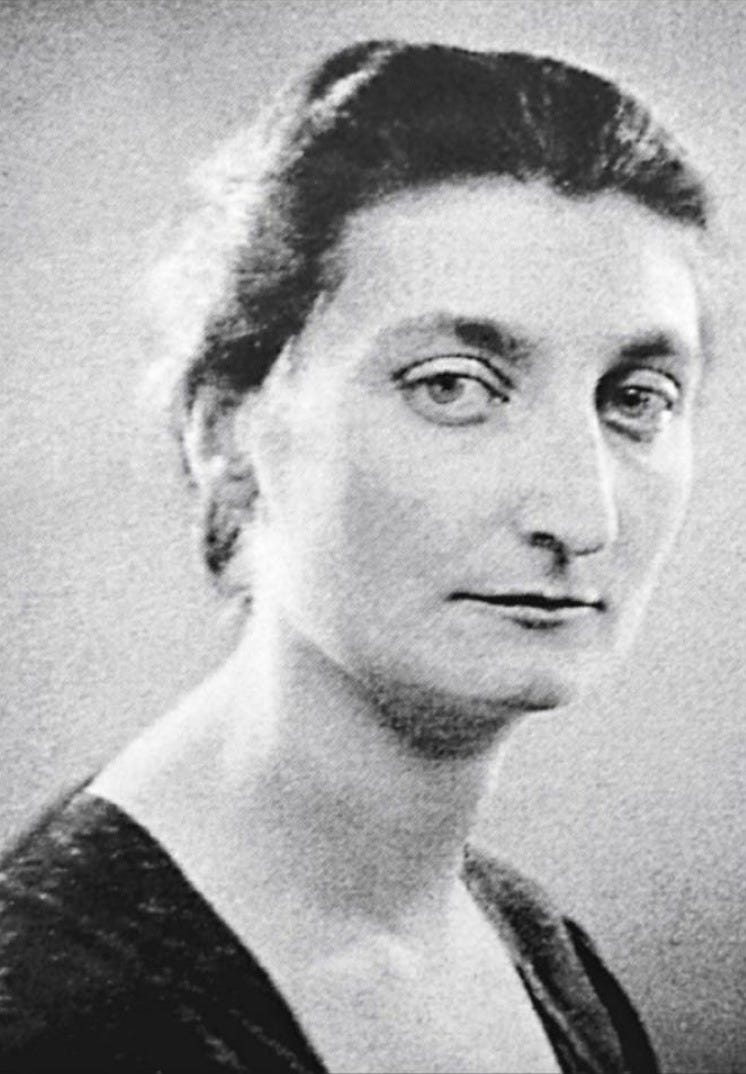
Suzanne Spaak (1905-1944) was a Belgian resistance and humanitarian activist during the Second World War. Spaak joined the Mouvement National Contre le Racisme, the network known as Red Orchestra, which played a central role in saving Jewish children from deportation - they arranged hiding places, passports and transport. It is believed that Spaak hid children in her own home. In 1943 she was arrested by the Gestapo and was tortured and executed on 12 August 1944 in Fresnes prison - just days before the liberation of Paris.
In 1939, just before the war, Pirotte was commissioned by the Belgian photo agency, Foto War, to report on the Baltic States. When war was declared and the Nazi’s invaded Belgium, Pirotte fled to Marseille, France. Her husband was deported but there is no information to say where and it has to be assumed that he died in the war years. In Marseille she worked in an aviation factory and made portraits of people on the beach - she also joined the Resistance where she would transport weapons and forged papers.
Throughout this time, she continued to work as a photojournalist, capturing the everyday as well as the exceptional. Her work included photographing the uprising of Marseille as well as the Marquis in action - for example, men with guns on the streets candidly caught on film. However, it wasn’t just the men that were photographed but women and children too - many echoing that of Gerda Taro’s coverage of the Spanish Civil War.
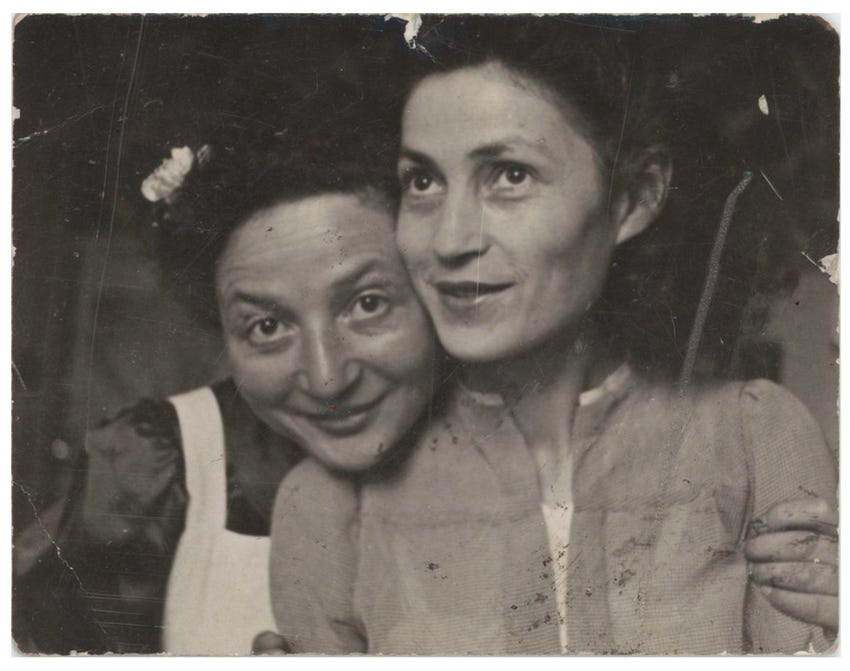
Pirotte suffered many losses throughout the war. Such as the disappearance of her husband and the execution of her beloved sister Maria by the Nazis. Maria, born in 1911, was arrested by the Vichy regime for her role in the Resistance - she was deported to Breslau (today Wroclaw, part of Poland, then Germany) and sentenced to death - she was executed by guillotine on 24 August 1944. As she went to her death, it is said that she shouted ‘Courage’. Of the three siblings, only Julia survived the war. Although there is very little information on her brother, it is believed that he died in a Soviet Gulag.
After the war, Julia returned to Poland where she settled in Warsaw. It was whilst working for a publication called Zolnierz Poliski (Polish Soldier) that her editor requested that she travel to Kielce on the 4 July 1946 after news spread that there was a pogrom. Thirty-seven people died and thirty-five were injured. She took over one-hundred pictures of the aftermath. Most notably, images of coffins in rows, where small ones with children in them haunt the viewer’s mind. She also took pictures of the injured being treated in hospital as well as people mourning their dead. During this period, antisemitism was still high, and though I am not going to show the images, I will put a link at the bottom for those interested in finding out more.
As with many women photographers, Julia Pirotte’s work went largely unknown for many years. Although some of her photos from the Kielce pogrom were printed in a report by Polish Soldier in 1946, they remained hidden from the public for several decades - in the same way that the Kielce atrocities were. In 1991, the pogrom was finally remembered and commemorated and Julia’s photos were acknowledged and given the importance they were due.
In 1948, Julia attended the World Congress of Intellectuals for Peace where she photographed people such as Picasso and Edith Piaf. She continued as a photojournalist until 1968. In 1996 she was awarded the Medal of Arts and Literature by the French Minister of Culture. She died in Warsaw on 25 July, 2000 and is buried at the Powazkowski Cemetery.
I wanted to write about Julia Pirotte because I felt that she needed to be brought to our attention. She was an incredibly brave woman and it saddens me to think of her work going unnoticed for so many years. I am glad that she finally got the recognition she deserved but even so, I do think more of us should know about her. Her work itself is powerful and serves as important testimony of life under occupation. I know some may find this a difficult post, but I believe that it also offers inspiration when global events today leave you feeling without hope.
If you would like to see more of Julia’s work then please click the link below or google her. I have deliberately left out images here as I wanted to be sensitive to those who may find them disturbing or triggering. Many thanks for reading.
https://www.icp.org/browse/archive/constituents/julia-pirotte
Comments
Post a Comment